← Archive · Today’s specimen
WLS-0019 · CANON RECORD
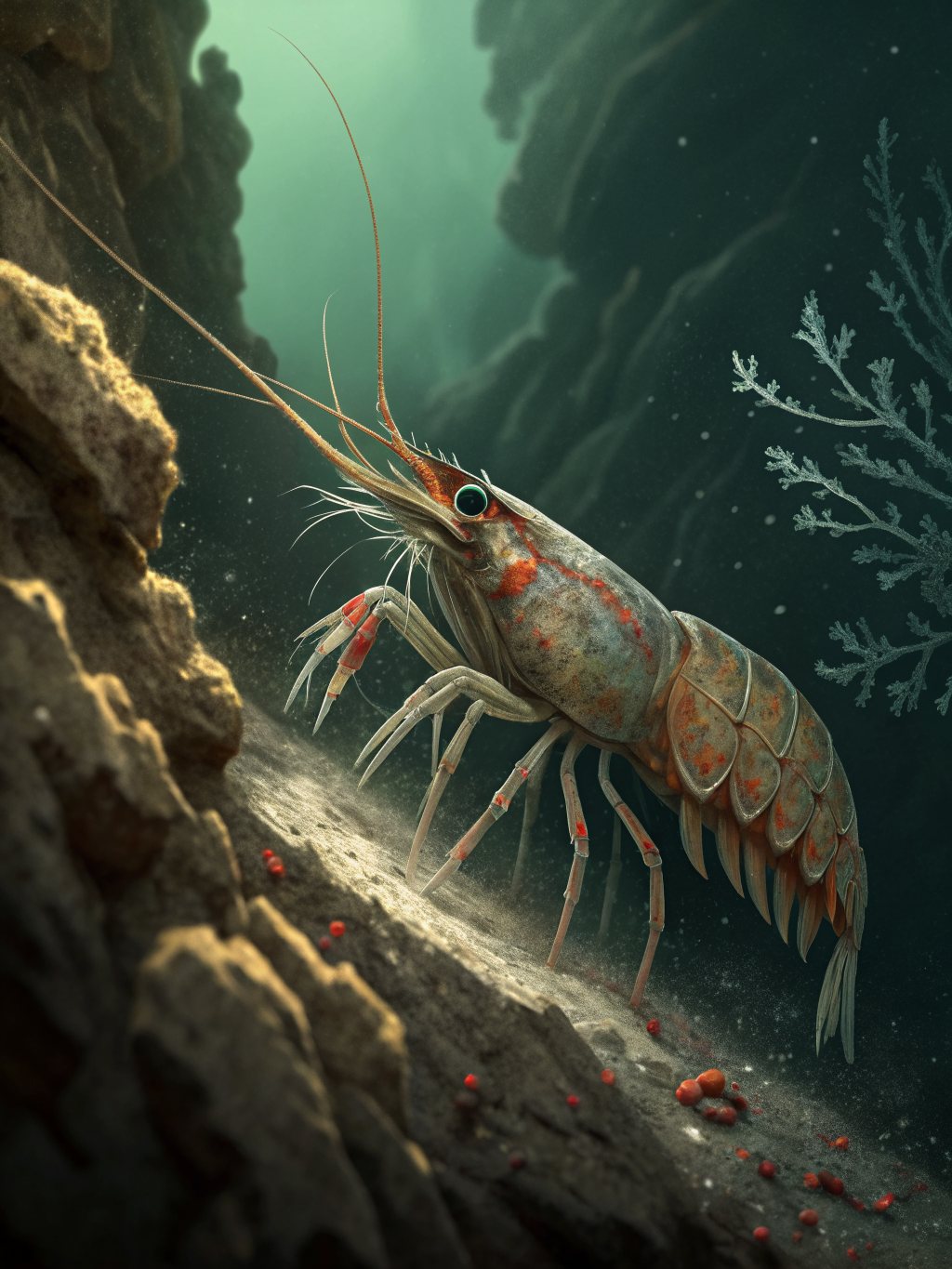
Mantle-Shear Prawn
Chimera — Bio-Mechanical Symbiote
“Where geothermal fury meets fungal architecture.”
2threat
7vitality
8armor
3speed
6cunning
UNCOMMON
A pre-Fall attempt to grow living seismic sensors by marrying mantis shrimp to deep-sea fungi, a project whose managers are now, delightfully, part of the geologic record they sought to monitor.
Special Ability
◈ Seismic Weave
When the ground trembles, the prawn exudes a filmy, fast-setting fungal cement that immediately binds to loose rock and sediment, autonomously performing emergency structural repairs to its volatile neighborhood.
Field Notes
Behold the Mantle-Shear Prawn, a creature whose very shell is a compromise between a crustacean’s vanity and a fungus’s grim practicality. Its iridescent plates, a stolen heirloom from some long-dead mantis shrimp, are now sutured together with a leathery, self-repairing mycelium. The famous smashing claws have been demoted to construction tools, endlessly darning and patching its burrow like a neurotic, deep-sea tailor. It’s an animal that gave up violence for civil engineering, which is frankly a more terrifying kind of patience.
The entire colony is a single, twitchy nerve ending for the volcano it calls home. A shiver in the rock, a change in the water’s acidic kiss, and they flash in a silent, beautiful panic. Their fungal networks are the only thing holding these unstable slopes together, a living glue holding back geological oblivion. They are the planet’s own emergency maintenance crew, plugging leaks in the foundation of the world with spit and mushroom thread.
They traded a killer's claws for a gardener's patience, and the world is marginally less shattered for it.
Reality Scraps · Source Material
The creature is fiction. These are the real, verifiable facts it was synthesized from,
with the exact public records used.
biology · REALITY SCRAP
Odontodactylus scyllarus (Linnaeus, 1758) — GBIF holds a georeferenced occurrence of Odontodactylus scyllarus (Linnaeus, 1758) from Philippines in 2026 (record 6130178515).
Source: GBIF Occurrence Records
· original record ↗
research · REALITY SCRAP
Fabrication factors influencing mechanical, moisture- and water-related properties of mycelium-based composites — Peer-reviewed work (2018) “Fabrication factors influencing mechanical, moisture- and water-related properties of mycelium-based composites”. published in Materials & Design. Abstract excerpt: Mycelium-based composites result from the growth of filamentous fungi on organic materials such as agricultural waste streams. These novel biomaterials represent a promising alternative for product design…
Source: OpenAlex (record WW2900989100)
· original record ↗
biology · REALITY SCRAP
Odontodactylus scyllarus (Linnaeus, 1758) — Recorded common names for Odontodactylus scyllarus (Linnaeus, 1758) in GBIF include: Bunter Fangschreckenkrebs, Camarón Mantis Arlequín, Clown-Fangschreckenkrebs, Coloured mantis shrimp, Peacock mantis shrimp, Harlequin mantis shrimp, Painted mantis shrimp, Lagosta-boxeadora, Mante de mer paon.
Source: GBIF Vernacular Names
· original record ↗