← Archive · Today’s specimen
WLS-0023 · CANON RECORD
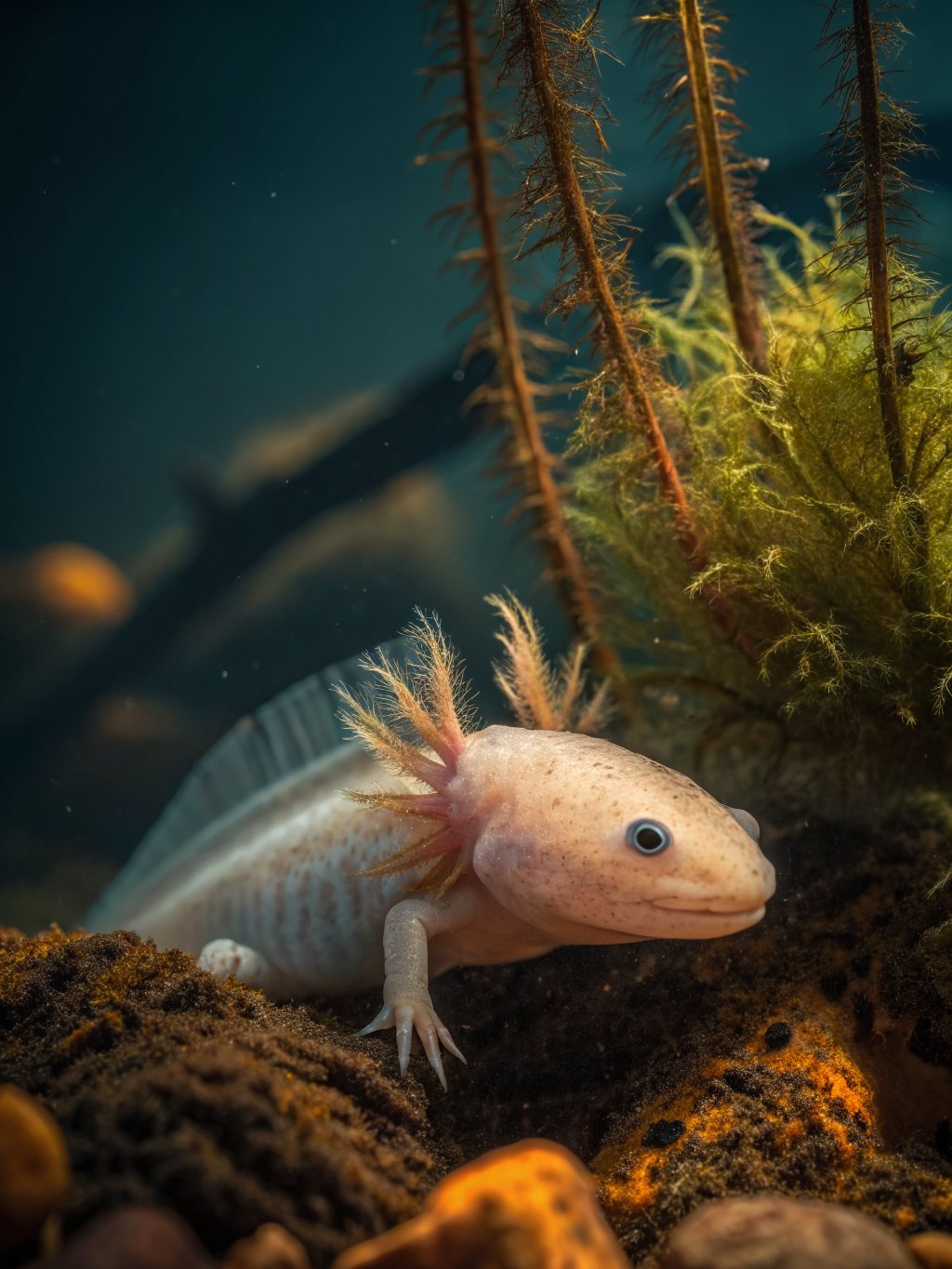
Axolotl-Ant Parasite
Engineered Chimera — Parasitic Symbiote
“A larval puppeteer that rewires ant colonies from within.”
3threat
7vitality
2armor
1speed
8cunning
COMMON
Another pre-Fall ‘solution’—axolotl regeneration spliced with bee parasite genetics, meant to control pests. Instead, it learned to control minds. Typical.
Special Ability
◈ Colony Rewire
Excretes a cocktail that reprograms ant brains. Suddenly, the whole colony is gardening mold, moving house, or throwing themselves at you—all to please the blob in the basement.
Field Notes
Let the record show: in 2087, humanity’s last gasp of cleverness finally birthed a master that doesn’t need legs to walk. This larval slug—pale, squirming, and disarmingly soft—infiltrates ant colonies not to eat, but to recruit. It turns tireless workers into gardeners of its own shit, farming glowing fungi in the dark. You wouldn’t notice until the whole mound starts smelling like a bioluminescent compost heap.
Observe the ants: once loyal, now fanatics. They haul scrap metal instead of food, pile gears where larvae should be, and tenderly stroke glowing mold in the damp. The parasite never shows itself—it’s the soft, pulsing god in the center, demanding minerals and devotion. It’s not a invasion. It’s a conversion.
Nature’s cult leader, with better real estate strategy.
Reality Scraps · Source Material
The creature is fiction. These are the real, verifiable facts it was synthesized from,
with the exact public records used.
biology · REALITY SCRAP
Ambystoma mexicanum (Shaw & Nodder, 1798) — GBIF holds a georeferenced occurrence of Ambystoma mexicanum (Shaw & Nodder, 1798) from Mexico in 2026 (record 6519315973).
Source: GBIF Occurrence Records
· original record ↗
research · REALITY SCRAP
The ants (Hymenoptera: Formicidae) and their parasites: effects of parasitic manipulations and host responses on ant behavioral ecology — Peer-reviewed work (2018) “The ants (Hymenoptera: Formicidae) and their parasites: effects of parasitic manipulations and host responses on ant behavioral ecology”. published in Journal of International Crisis and Risk Communication Research. Abstract excerpt: Ants can display modified behaviors that represent the extended phenotypes of genes expressed by parasites that infect them. In such…
Source: OpenAlex (record WW2891502001)
· original record ↗
biology · REALITY SCRAP
Nosema apis Zander, 1909 — GBIF holds a georeferenced occurrence of Nosema apis Zander, 1909 from Sweden in 2026 (record 6238652371).
Source: GBIF Occurrence Records
· original record ↗